
DNA Vectors


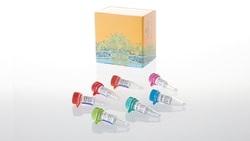
Promega CheckMate™/Flexi™ Vector Mammalian Two-Hybrid System
The CheckMate/Flexi Vector Mammalian Two-Hybrid System provides a means to study suspected interactions between two proteins or domains and can also be used to generate stable cell lines for cell-based assays.

![Promega pBiT3.1-N[CMV/HiBiT/Blast] Vector, 20microg](https://assets.fishersci.com/TFS-Assets/CCG/Promega-Corporation/product-images/N2361.jpg-250.jpg)
Promega pBiT3.1-N[CMV/HiBiT/Blast] Vector, 20microg
The pBiT3.1-N, pBiT3.1-C and pBiT3.1-secN [CMV/HiBiT/Blast] Vectors are traditional cloning vectors for inserting proteins of interest. Cloned ORFs contain the HiBiT tag at the N or C terminus; the N terminus for transmembrane or secreted proteins.
Promega pSV-β-Galactosidase Control Vector
A positive control vector for monitoring transfection efficiencies of mammalian cells. The SV40 early promoter and enhancer drive transcription of the lacZ gene, which encodes the beta-galactosidase enzyme.


Promega HaloTag™ Fusion (N-Terminal) Mammalian Expression Vectors
Vectors designed for expression of N-terminal-tagged HaloTag™ fusion proteins in mammalian cells. Once expressed, use the HaloTag™ fusion protein for cell imaging of protein localization or trafficking in conjunction with the fluorescent HaloTag™ Ligands.

Thermo Scientific™ GeneBLAzer™ N-terminal Gateway™ Fusion Kit, for in vivo detection
To fit all of your expression needs, Invitrogen offers state-of-the-art Gateway™ destination vectors for expression in E. coli

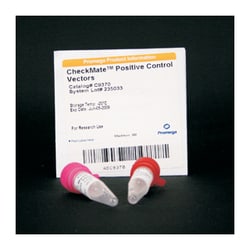
Promega Control Vectors for CheckMate™/Flexi™ Vector Mammalian Two-Hybrid Systems
Powerful system for detecting protein:protein interactions in vivo.
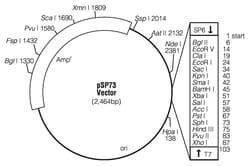
![Promega pGL4.12[luc2CP] Luciferase Reporter Vector](https://assets.fishersci.com/TFS-Assets/CCG/product-images/F60517~p.eps-250.jpg)
Promega pGL4.12[luc2CP] Luciferase Reporter Vector
The Vector is a promoterless reporter vector optimized for expression in mammalian cells.
![Promega pBiT3.1-C[CMV/HiBiT/Blast] Vector, 20microg](https://assets.fishersci.com/TFS-Assets/CCG/Promega-Corporation/product-images/N2371.jpg-250.jpg)
Promega pBiT3.1-C[CMV/HiBiT/Blast] Vector, 20microg
The pBiT3.1-N, pBiT3.1-C and pBiT3.1-secN [CMV/HiBiT/Blast] Vectors are traditional cloning vectors for inserting proteins of interest. Cloned ORFs contain the HiBiT tag at the N or C terminus; the N terminus for transmembrane or secreted proteins.
![Promega pGL4.16[luc2CP/Hygro] Luciferase Reporter Vector](https://assets.fishersci.com/TFS-Assets/CCG/product-images/F60527~p.eps-250.jpg)
Promega pGL4.16[luc2CP/Hygro] Luciferase Reporter Vector
The Vector offers hygromycin for stable selection and have luc2 genes that code for luciferase proteins with different stabilities.
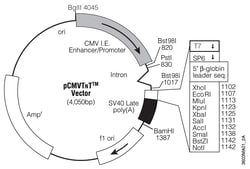
Promega pCMVTNT™ Vector
The pCMVTNT and pTNT Vectors are designed for convenient expression of cloned genes in vitro or in vivo. SP6 and T7 promoters allow expression from SP6- or T7-based coupled in vitro transcription/translation systems.
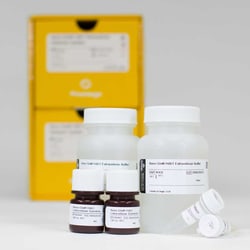
Promega Nano-Glo HiBiT Extracellular Detection System, 10 x 100ml
Nano-Glo HiBiT Extracellular Detection System quantitates cell surface or secreted protein expression using a simple add-mix-read assay format and the nonlytic Nano-Glo HiBiT Extracellular Detection Reagent.

Promega pAdVAntage™ Vector
Co-transfection of mammalian cells with the pAdVAntage Vector enhances transient protein expression in a variety of cell types by increasing translation initiation.